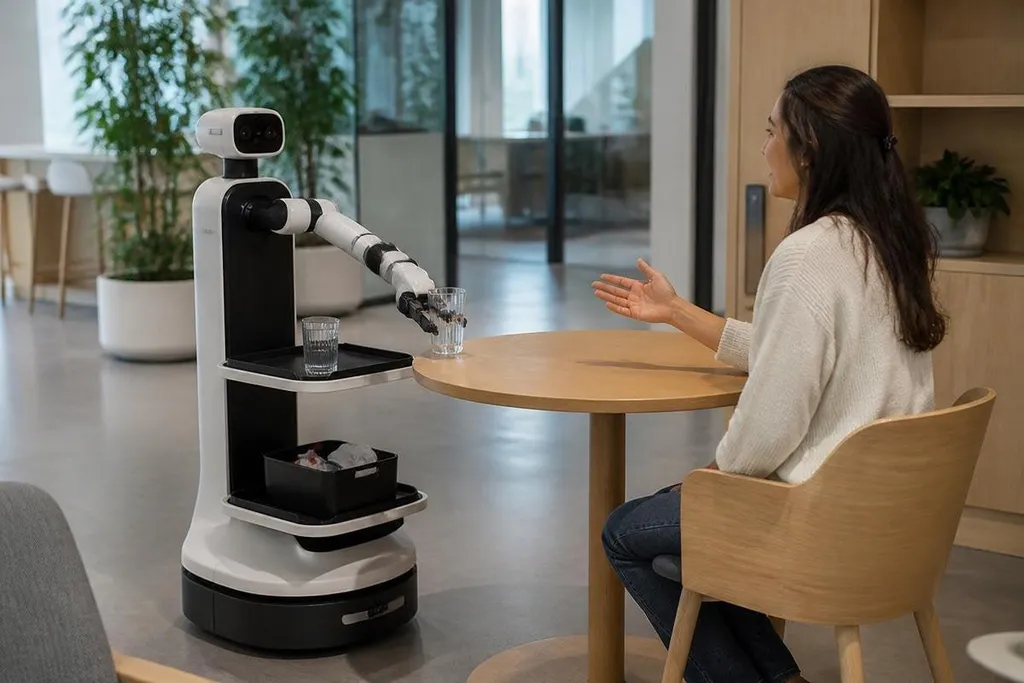
Service robots used to follow narrow scripts: move here, stop there, repeat. AI now lets the same robot read a spoken request, identify objects through cameras, and choose steps for a task that was not written out line by line.
That change matters most for service work, where rooms shift, objects move, and people rarely act like a factory fixture.
- AI can turn a spoken request into a sequence of robot actions.
- Cameras and other sensors help the robot respond to changing rooms.
- Human checks still matter when a task affects safety, privacy, or property.
The software change
A traditional service robot follows rules made for known conditions. If a delivery cart expects a clear corridor and finds a chair in its path, its response depends on the rules that engineers wrote before deployment.
AI adds a layer that can connect what the robot sees with what a person asks it to do.
A camera may spot the chair, while a language model turns “take this to the meeting room” into smaller actions such as finding the item, moving through the building, and stopping at the requested room.
That does not mean the robot understands the task like a person. It means the software can work with less rigid instructions, then pass commands to parts that control movement, sensing, and handling.
The physical robot still sets the limits. A model may identify a cup, but the robot needs a gripper that can lift it without crushing it. It may plan a route, but wheels, battery life, doors, stairs, and floor space decide if that route works.
Where service robots gain ground
The biggest change appears in tasks that vary from one job to the next. A robot in a hotel, care setting, shop, or office may face different objects and requests during every shift, so fixed scripts can become costly to maintain.
AI can help the robot sort requests by type and ask for more detail when a command is unclear. It can also connect language with visual data, so “bring the blue box” refers to an object in the room instead of a fixed location in a database.
For an operations manager, this can reduce the number of commands staff need to learn. It can also make a robot useful across more areas of a building, provided the system has enough maps, sensor data, and safe movement rules.
When an AI system makes the choice, the useful test is which robot, task, and setting produced it. A dated report from Robot24 can place that claim beside the machine and job, so you can judge the software before counting the time it may save.
The practical gain is less time spent rewriting a robot for every small change. The trade is that the system becomes harder to inspect because part of its response comes from a trained model rather than a short list of visible rules.
The limits AI does not remove
AI can misread a scene, choose the wrong object, or give a confident answer when the sensor data is poor. A service robot also works near people, so a wrong action can damage property or create a safety risk.
Privacy adds another concern. Cameras and microphones may collect information about customers, staff, patients, or visitors. Operators need clear rules for what the robot records, where that data goes, and how long it stays there.
The cost of change also moves from hardware into software. A team may spend less time writing narrow motion scripts, then spend more time testing model updates, checking logs, setting limits, and reviewing failures.
I’d judge an AI service robot by its recovery after a mistake, not by how smoothly it handles a staged request.
A buying check for service robots
Use this list before you approve a pilot or replace a scripted system:
- Define the task in measurable terms, such as delivery time, successful handoffs, or staff hours saved.
- Ask which actions come from fixed rules and which come from an AI model.
- Test blocked routes, missing objects, unclear speech, and people entering the robot’s path.
- Check the robot’s data controls, including recording, storage, deletion, and access.
- Set a human stop process for unsafe movement or uncertain requests.
A service robot becomes more useful when AI helps it handle normal variation without hiding its limits. The next question for every deployment is practical: how many tasks can it complete safely before a person must take over?